
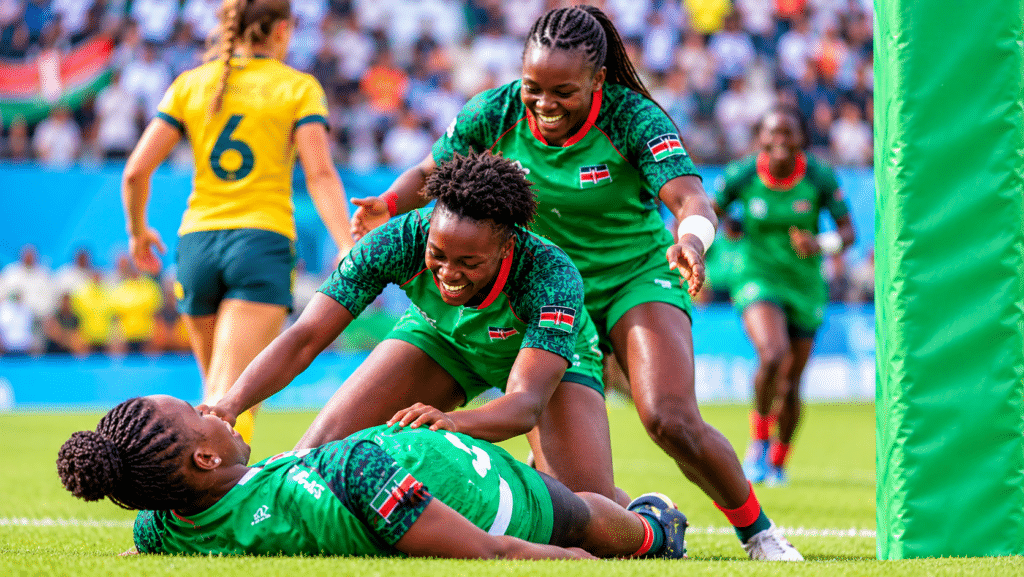
Summary: Kenya’s Rising Lionesses won the Dakar 2026 Youth Olympic rugby sevens title. This article looks at why governance, athlete protection and commercial rights shape whether such victories translate into lasting development.
On 3 November 2026, Kenya’s Rising Lionesses won the girls’ rugby sevens title at the Dakar 2026 Youth Olympic Games. They beat Australia 17–12 in the final to claim Kenya’s first Youth Olympic rugby gold. The run to the final included a semi-final win over Madagascar.
The achievement of these young athletes invites a wider question: will moments like this remain isolated triumphs, or become the base of a lasting sporting ecosystem? Much of the answer lies in the legal and regulatory framework that supports athletes, and this article considers some of its key features.
1. Governance: The Silent Partner of Performance
Results on the field depend on clear rules off it. The Sports Act, 2013 (Cap. 223) set up the national framework, including Sports Kenya, the Sports Registrar and the Sports Disputes Tribunal.
Reform is under way. Constitutional review at Kenya Rugby Union level aims to strengthen transparency, accountability and democratic process. The draft Sports Bill, 2026 would go further, with a proposed National Sports Regulatory Authority and an emphasis on equity and sound governance.
Clear eligibility rules, conflict-of-interest safeguards and credible elections reduce the disputes that distract federations. That leaves more resources for coaching, youth pathways and the programs that produce teams like the Rising Lionesses.
2. Protecting Young Talent
Youth Olympic athletes are teenagers, so international success brings commercial interest quickly. Without clear legal protection, young players can end up in poorly drafted contracts that ignore their long-term interests.
Currently, the relationship between athletes and clubs or federations rests mainly on contract and federation rules, with employment law applying where the relationship qualifies. Kenyan law has also not recognized a standalone right in an athlete’s image. The draft Sports Bill, 2026 would change this. It proposes statutory control over the commercial use of an athlete’s name, image and likeness, alongside stronger provisions on safeguarding, athlete welfare and gender equity.
For a generation of players who may soon attract sponsors, these protections are essential.
3. Commercialization, Compliance and Disputes
Sponsorship, media rights and event hosting bring opportunity and risk. Three areas need attention:
- Anti-doping compliance under the Anti-Doping Act, 2016.
- Proper registration of sports organizations.
- Clear contracts for national team participation, sponsorship and image use.
When disputes arise over selection, contracts or discipline, the Sports Disputes Tribunal offers a specialized and faster route than ordinary court proceedings. It also helps preserve relationships within the sporting community.
4. Looking Ahead
As the Sports Bill, 2026 moves through the legislative process, athletes, parents and guardians, clubs, federations and sponsors will need to follow its development closely. Public participation is one avenue for stakeholders to contribute views on governance, safeguarding and image rights. Anyone considering a contract or sponsorship arrangement involving a young athlete should read its terms carefully and take independent advice before signing.
Talent alone is not enough. Legal clarity on governance, welfare, commercial rights and dispute resolution gives young athletes a stable base to build on. As Kenya invests in sport, strengthening that framework will help turn more potential into podium finishes.
This article is for general information and public discussion only. It is not legal advice and does not create an advocate-client relationship.
HANSEN ADVOCATES LLP
Our Take | Nairobi, November 2026